






Salesforce two-way connector
Two-way sync between Salesforce and everything else.
Unito connects Salesforce with 60+ tools through secure, enterprise-grade, no-code integrations. Sync cases, opportunities, onboarding tasks, and more - both ways.
Experience two-way sync for Salesforce
Absolutely love the two-way sync. It allows our pipeline to run seamlessly from Sales to Engineering, while ensuring everyone is on the same page in Salesforce and Jira.
True two-way live sync, out of the box
Fully configurable, no coding required
Scale and extend based on your needs
Sync Salesforce with business-critical tools
Popular Integrations
More Tools



















































Salesforce Connector Details
Supported object types
Supported field types
Featured on
Salesforce MarketplaceFeatures that bring your Salesforce workflows to the next level
Lookup field sync
Expose the full schema of Salesforce reference fields and apply filters on subfields — like Account.Region — to keep synced data precise and relevant.
Mixed hierarchy support
Sync any object alongside its sub-items — like Accounts with their Contacts and Opportunities, or Cases with their Tasks — in a single configured flow.
Sandbox support
Test your workflows before going live to production by connecting to your sandbox environment.
Public and private comment support
Sync public and private comments to tools that don't natively support the distinction. Use Unito rules to control which comments sync and where they surface.
Key features
See how teams succeed with Unito
-

"Without a unified solution, we were spending as much time managing tools as we were working on the projects themselves"
-

"Unito allows our pipeline to run seamlessly from Sales to Engineering, while ensuring everyone is on the same page in Salesforce and Jira."
-

"Unito grants more visibility to executives and project managers. Syncing Jira and Wrike provided more clarity in our reporting and enables collaboration between teams."
-

"We saved more than 40 hours a week after syncing Asana and Jira through Unito. Our engagement with the C-suite was far, far better than expected."
-

"We're not just saving on licensing costs - we're reallocating time and resources. Tasks that used to take hours are now automated."
-

"Unito allows to have the right project management tool and the right development tool so our teams can do what they need to do without changing the way they work."
Real-world ways Unito simplifies integrations
Incident escalation to development
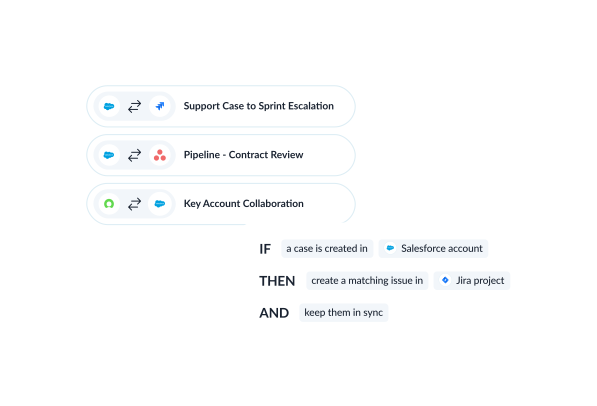
Push Salesforce cases to Jira or Azure DevOps to break down silos between support and engineering and resolve issues faster.
Connect Salesforce with
Cross-functional revenue workflows
Sync Salesforce with Asana or Smartsheet to coordinate sales, marketing, and ops around key deals, renewals, and onboarding projects.
Connect Salesforce with
Ticket visibility in Salesforce
Import support tickets from tools like ServiceNow or Zendesk into Salesforce to give account teams full context and improve collaboration with IT.
Connect Salesforce with
Power AI agents with complete context
Feed AI agents with real-time data and full business context by connecting Salesforce to tools across ITSM, DevOps, and business operations.
Connect Salesforce with
Enterprise-grade control and reliability
Unito is designed to meet the highest standards of security and performance.
SOC 2 Type 2 certified
GDPR and CCPA compliant
- SSO
- End-to-end encryption
- Access controls and flow permissions
- Centralized monitoring tools
- No data stored by Unito
Frequently asked questions about Salesforce
Unito syncs Salesforce objects such as opportunities, contacts, and tasks with your other tools, mapping fields like text, numbers, dates, picklists, and custom fields. Field-level mappings control which data syncs and in which direction.
Your Salesforce plan must support API access, which is available on Enterprise, Unlimited, Performance, and Developer editions. Within Salesforce, you need edit rights on any field you include in a flow.
Zapier moves Salesforce data one way per Zap — a trigger fires and an action follows. Unito builds a continuous two-way relationship between Salesforce records and items in your other tools. It also syncs historical records, not just ones created after setup.
You don't need a full admin role, but you need edit rights on every field you want to include in a flow, and your Salesforce edition must include API access. The setup itself is no-code.
Yes. Records that existed before the integration can be linked and kept updated. Salesforce doesn't provide webhooks to Unito, so changes are picked up on a roughly five-minute cycle.