
 4.5 on G2
 SOC 2 Type 2
How teams connect GitHub and Trello
Pick the setup closest to yours. Each one links cards on your Trello boards to issues in your GitHub repositories.
-
 Issues
 Items sync both ways between GitHub and Trello
 Cards
Send bugs from project teams to engineering
When a card is found in Trello, create a matching issue in GitHub and keep them in sync.
 Comments and description stay in sync, so engineers get the full bug report in GitHub and the project team reads their replies on its Trello card.
-
Issues
Items sync both ways between GitHub and Trello
Cards
Show dev progress to project managers
When an issue is found in GitHub, create a matching card in Trello and keep them in sync.
Labels and titles carry over to Trello cards as engineers triage GitHub issues, so project managers follow delivery from the board they already plan on.
-
Issues
Items sync both ways between GitHub and Trello
Cards
Run shared work across both teams
When an issue is found in GitHub or a card in Trello, create a matching one in the other tool and keep them in sync.
Comments and labels sync both ways, so a card added on the Trello board or an issue opened in GitHub shows both teams the same labels and discussion.

Trusted by Fortune 500 companies and global brands


Build Trello-to-GitHub workflows in simple steps
Connect your tools, choose what to sync, and launch your flow. No engineering required.
Connect your tools
Define how data flows
Set flow conditions
Review how fields map across tools
Everything Unito syncs between GitHub and Trello
Choose which tool creates new items and which way each field syncs, so Trello cards can create GitHub issues while comments and description update both ways. Set rules on field values to decide which cards and issues sync.
GitHub
Supported object types
- Issues
- Pull requests
Also syncs
 Comments
Supported fields
 Two-way
- Title
- Description
- Status
- Assignee
- Label
- Comment
 One-way (read only)
- Milestone due date
- Repository name
- Issue type
- Issue number
- Milestone
- Opened by
- Created at
- Issue ID
- Link to issue
- Updated at
Supported GitHub versions

Trello
Supported object types
- Cards
- Checklists
Also syncs
- Comments
 Attachments
 Subtasks
Supported fields
Two-way
- Title
- Description
- Status
- Due date
- Due date checkbox
- Start date
- Label
- Attachment
- Checklist
- Checklist item completion
- Comment
- List
- Member
One-way (read only)
- Board name
- Creator
- Link to card
- Updated at
Real-time data sync with full control, no coding required
Enterprise-grade sync without the complexity
Cross-platform integration at scale usually takes weeks or months to deploy. Unito delivers reliable sync between Trello and GitHub with a self-serve setup and field-level configurability.
Abstracted complexity

Lower total cost of ownership
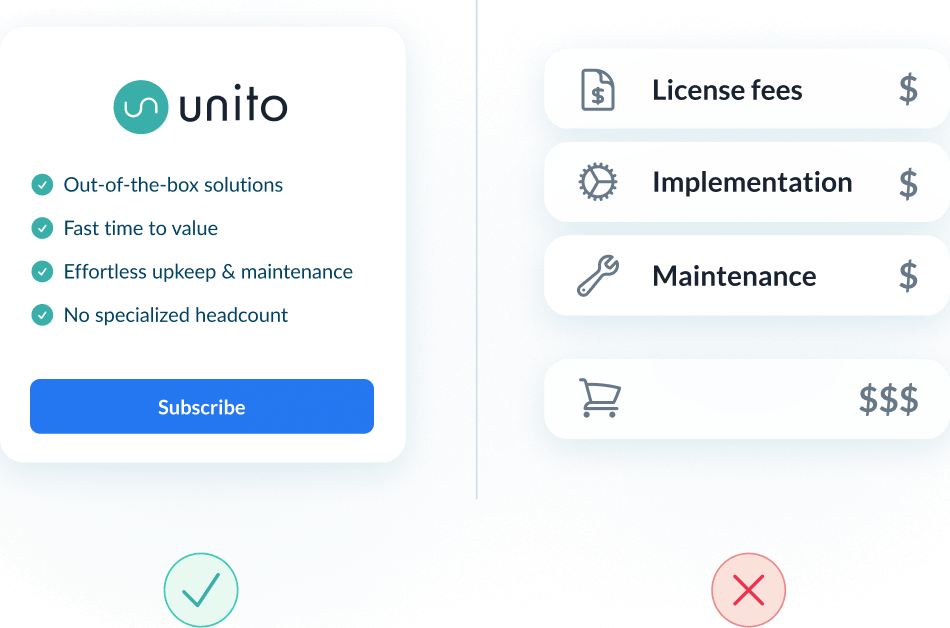
Scalability and resilience
in sync
in sync
Enterprise-grade control and reliability
Unito is designed to meet the highest standards of security and performance.

SOC 2 Type 2 certified

GDPR and CCPA compliant
- SSO
- Secure from end to end
- Access controls and flow permissions
- Centralized monitoring tools
- No data stored by Unito
See how teams succeed with Unito
-

"Unito’s flexibility and support were critical. They didn’t just provide a tool; they became a partner in solving our workflow challenges."

$595k
saved annually
21k
tasks synced monthly
7.9k
hours saved annually
-

"Absolutely love the two-way sync. It allows our pipeline to run seamlessly from Sales to Engineering, while ensuring everyone is on the same page in Salesforce and Jira."

$312k
saved annually
2600
hours saved
-

"Unito grants more visibility to executives and projects managers. Syncing Jira and Wrike provided more clarity in our reporting and enables collaboration between teams."

$291k
saved annually
3328
hours saved
-

"We saved more than 40 hours a week after syncing Asana and Jira through Unito. Our engagement with the C-suite was far, far better than expected. "

$218k
saved annually
2236
hours saved
-

"Unito isn’t just a nice-to-have—it’s a necessity once you realize how much time and effort it saves."

8.5
weeks IT time saved/year
30-40
ServiceNow licenses saved
9.79x
ROI
-

"Unito allows us to use the right project management and development tools so our teams can do their work without changing how they work."

$98k
saved annually
1040
hours saved
See how to sync Trello and GitHub with Unito
Book time with an integration expert who can help solve your specific workflow integration challenges.
What to expect
- A 15-30 min call to assess your workflow and integration needs
- A solutions overview of Unito’s sync platform
- Hands-on help to get started and support your evaluation
Frequently asked questions about GitHub and Trello
Yes. With Unito’s two-way sync, you set rules so qualifying Trello cards automatically create matching GitHub issues. As either side changes, updates flow back bidirectionally to keep both in sync.
Yes. Unito syncs comments between Trello and GitHub, with control over private and public visibility, so each team sees the context it needs without exposing internal notes.
Yes. Unito maps native and custom fields, and supports custom fields available through each tool’s API. You define field mappings and flow direction for each one.
You do, with no code. Unito’s no-code setup means anyone on your team can build, adjust, and own the Trello-GitHub flow without developer help or scripting to maintain it.
About GitHub
GitHub is the world's largest developer platform, hosting code repositories for individual developers and enterprise engineering teams. Beyond version control, GitHub Issues and Projects help teams plan, track, and ship software in one place.
Learn more about Unito's GitHub integrations ↗Popular Tool Pairings
About Trello
Trello is a task management application designed to make it easier for teams to organize their work in one place. It allows users to create boards with cards containing tasks or objectives which can be organized into columns or lists depending on their project’s needs.
Learn more about Unito's Trello integrations ↗