GITHUB AND PRODUCTBOARD INTEGRATION

Sync anything between GitHub and Productboard

Unito's real-time, two-way sync connects Productboard and GitHub with enterprise-grade security, full control, and zero coding.

What to expect

  • A 15-30 min call to assess your workflow and integration needs
  • A solutions overview of Unito’s sync platform
  • Hands-on help to get started and support your evaluation

Trusted by Fortune 500 companies and global brands

Real-time data sync with full control, no coding required

Custom sync rules

Use intuitive rules (conditions or filters) to decide exactly what data to sync, such as status, assignee, labels, and more.

Deep field configurability

Configure your data flow field by field. Map any native or custom fields and define flow direction for each.

Full relationship support

Sync hierarchies and related items across tools, keeping linked objects, dependencies, and parent-child relationships fully intact.

Historical data sync

Your sync doesn't rely on live triggers. Unito rules apply to any object in your tools and can also include historical data.

Comment & attachment support

Sync comments across tools with control over private and public visibility, and sync attachments for full visibility.

Live data transformation

Transform data in real time with transformers to combine fields, convert HTML to text, extract values, or apply custom string logic through JSON settings.

Enterprise-grade sync without the complexity

Cross-platform integration at scale usually takes weeks or months to deploy. Unito delivers reliable sync between Productboard and GitHub with a self-serve setup and field-level configurability.

Abstracted complexity

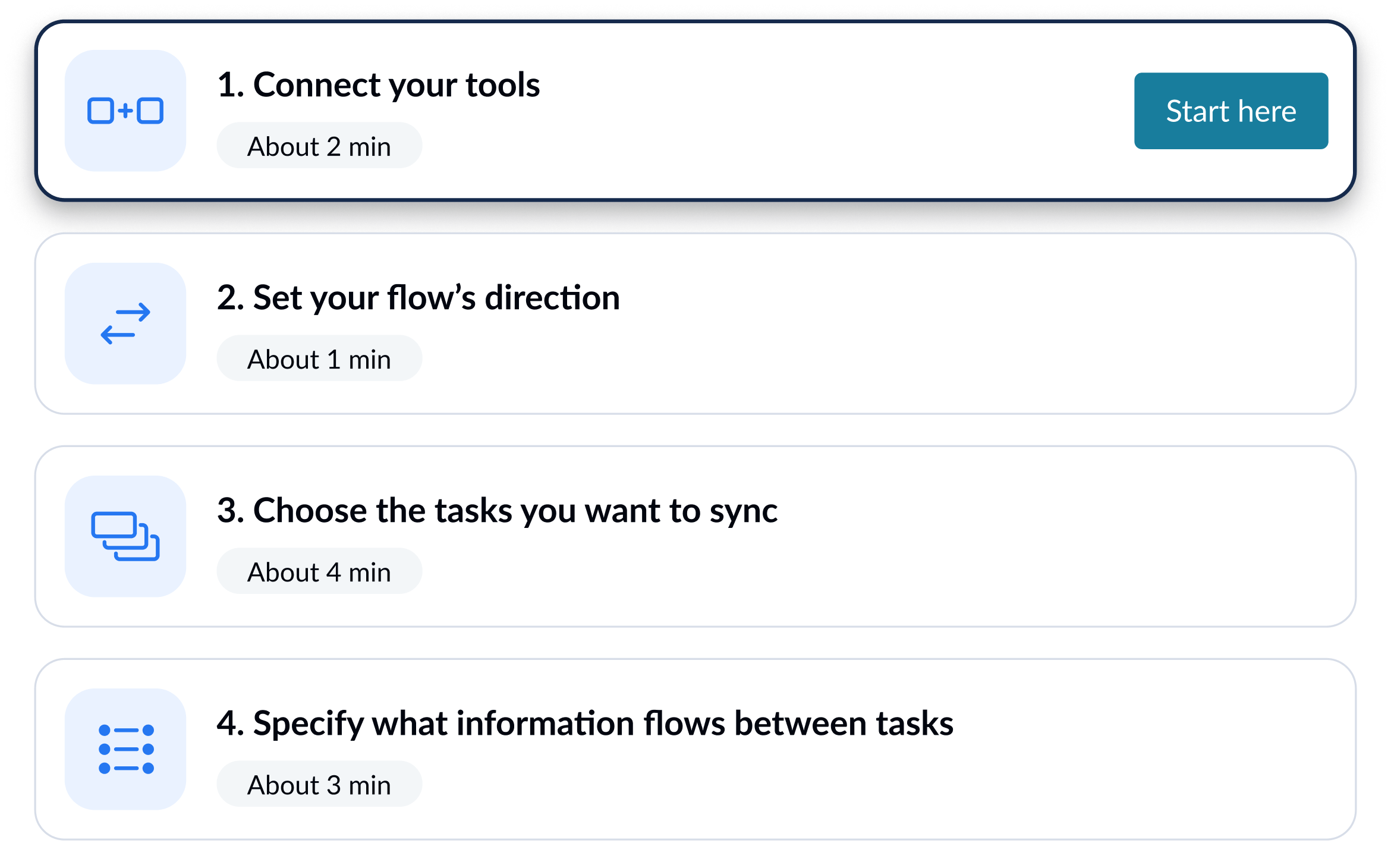
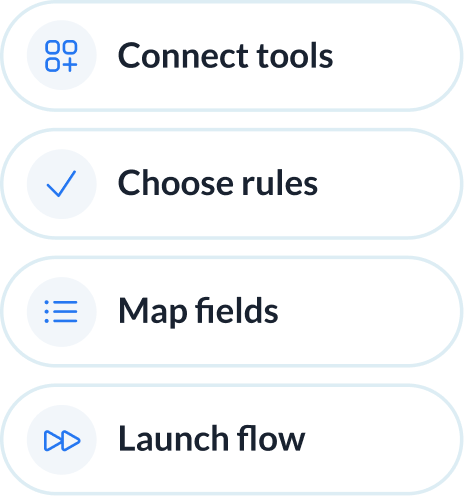
Connect Productboard and GitHub with an intuitive, out-of-the-box solution that allows for full configurability of your integration. Unito doesn't require custom logic, scripting, or dev-led setup.
Abstracted complexity

Lower total cost of ownership

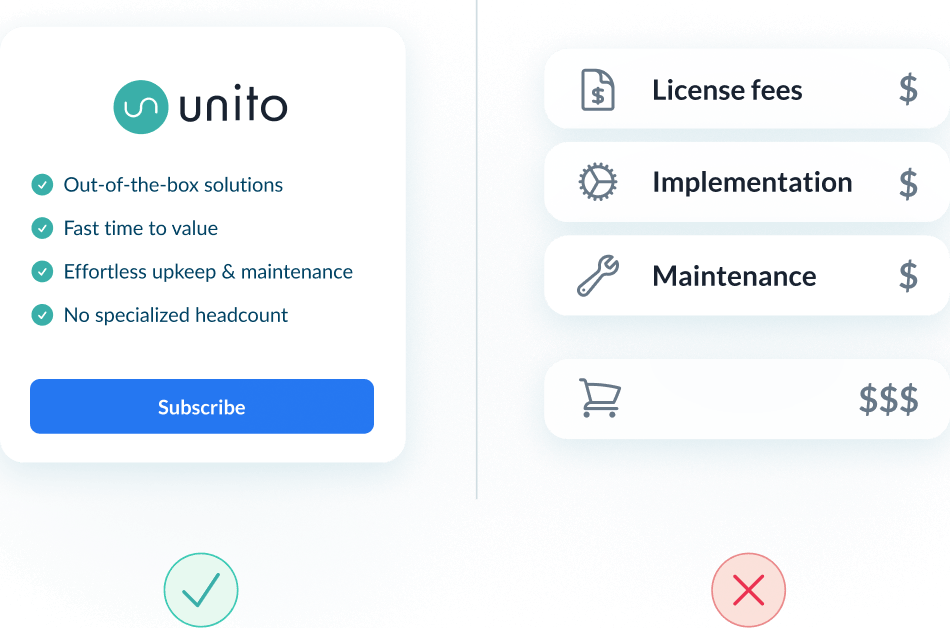
Most iPaaS tools drive up cost with long rollouts and heavy upkeep. Unito lowers TCO with fast time to value, and no specialized headcount to maintain or scale integrations.
Lower total cost of ownership

Scalability and resilience

Maintain real-time data consistency across datasets of any size. Unito's auto-scaling, intelligent API throttling and automatic recovery ensure uptime even during peak loads and tool downtimes.
125K work items
in sync
600K500K400K300K200K100K0
W1 W2 W3 W4 W5 W6
Roadmap-to-execution sync 22K items in sync
Bug triage & routing 17K items in sync
Sprint & release coordination 10K items in sync
Abstracted complexity
Lower total cost of ownership
125K work items
in sync
600K500K400K300K200K100K0
W1 W2 W3 W4 W5 W6
Roadmap-to-execution sync 22K items in sync
Bug triage & routing 17K items in sync
Sprint & release coordination 10K items in sync

Enterprise-grade control and reliability

Unito is designed to meet the highest standards of security and performance.

SOC 2 Type 2 certified

GDPR and CCPA compliant

  • SSO
  • End-to-end encryption
  • Access controls and flow permissions
  • Centralized monitoring tools
  • No data stored by Unito

Turn Productboard features into GitHub issues

When a feature or release is ready in Productboard, Unito dispatches it to GitHub as an issue so engineers can start work without re-entry. As pull requests and commits progress in GitHub, status and updates flow back to the matching Productboard feature.

Schedule your free demo

Hand off features without copy-paste

Promote prioritized Productboard features into GitHub issues, with descriptions, notes, and fields carried over so engineering picks up the full context.

Keep both sides current

As GitHub issues move from open to closed, status and comment updates sync back to the linked Productboard feature, so product sees real-time progress without asking.

Sync the fields that matter

Map Productboard fields to GitHub issue fields, including labels, assignees, and custom fields. Define the direction each field flows so both teams stay aligned on the details they own.

See how you can sync GitHub and Productboard with Unito

Book time with an integration expert who can help solve your specific workflow integration challenges.

What to expect

  • A 15-30 min call to assess your workflow and integration needs
  • A solutions overview of Unito’s sync platform
  • Hands-on help to get started and support your evaluation

About GitHub

GitHub is the world's largest developer platform, hosting code repositories for individual developers and enterprise engineering teams. Beyond version control, GitHub Issues and Projects help teams plan, track, and ship software in one place.

Learn more about Unito's GitHub integrations

About ProductBoard

Productboard is a product management platform that helps teams understand customer needs, prioritize what to build, and align everyone around the roadmap. Product teams use it to centralize feedback, define features, and share plans across the organization.

Learn more about Unito's ProductBoard integrations

Frequently asked questions about GitHub and ProductBoard

Can a new Productboard feature automatically create a GitHub issue?

Yes. With rule-based criteria, Unito can create a GitHub issue whenever a matching Productboard feature appears. Once linked, the two stay in two-way sync, so changes on either side update the other automatically.

Do comments and notes stay visible across Productboard and GitHub?

Yes. Unito syncs comments between Productboard and GitHub in both directions, and you control private versus public visibility so internal notes only surface where you intend them to.

Can I sync custom fields between the two tools?

Yes. Unito supports custom fields through each tool’s API. You can map native or custom Productboard fields to GitHub issue fields and set the flow direction for each one individually.

Who maintains the integration, and is it no-code?

Unito is fully no-code, so product or engineering can own it without scripting or dev support. You build and adjust your Productboard-to-GitHub flow through a visual interface and update rules anytime.

ʕ•ᴥ•ʔ