
 4.5 on G2
  SOC 2 Type 2
 How teams connect Azure DevOps and Freshservice
Pick the setup closest to yours. Each one also works with custom Azure DevOps work item types.
-
 Bugs
Bugs
 Items sync both ways between Azure DevOps and Freshservice
 Tickets
Escalate incidents to engineering
When a ticket is found in Freshservice, create a matching bug in Azure DevOps and keep them in sync.
 Status, priority and comments sync both ways, so service desk agents can update the requester from the Freshservice ticket while engineers fix the bug.
-
User stories
Items sync both ways between Azure DevOps and Freshservice
Tickets
Send root-cause work to engineering
When a ticket is found in Freshservice, create a matching user story in Azure DevOps and keep them in sync.
Status, description and comments sync both ways, so agents on repeat Freshservice tickets see when engineering starts the permanent fix and when it ships.
-
User stories
Items sync both ways between Azure DevOps and Freshservice
Service requests
Route change requests to engineering for review
When a service request is found in Freshservice, create a matching user story in Azure DevOps and keep them in sync.
Description, priority and attachments sync both ways, so engineering sizes each requested change from the requester's specs while IT tracks it in Freshservice.

Trusted by Fortune 500 companies and global brands












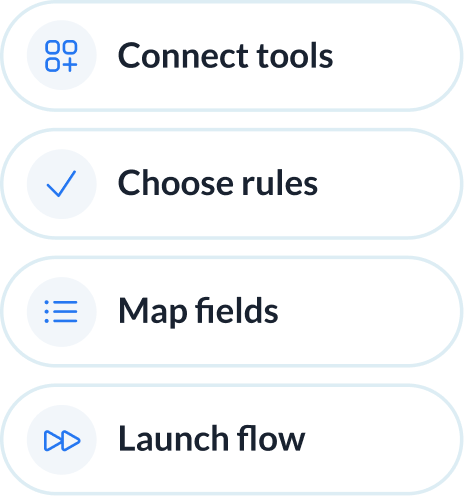
Set up your Azure DevOps–Freshservice sync in simple steps
Connect your tools, choose what to sync, and launch your flow. No engineering required.
Connect your tools
Define how data flows
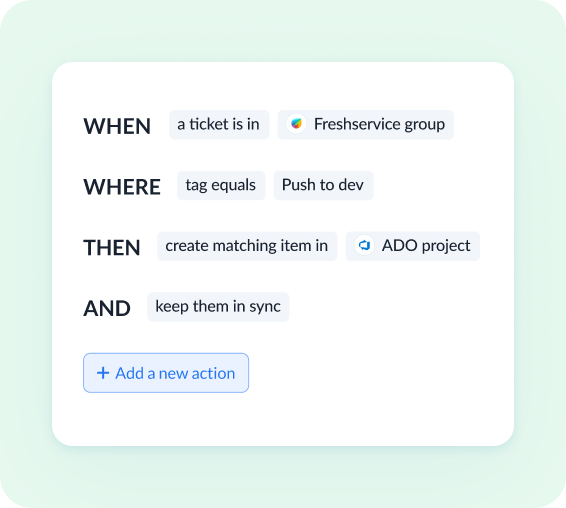
Set flow conditions
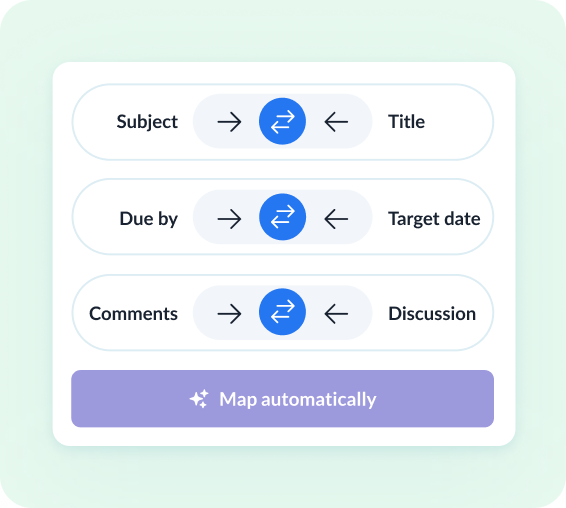
Review how fields map across tools
Everything Unito syncs between Azure DevOps and Freshservice
Choose which tool creates new items and which way each field syncs, so Freshservice tickets can create Azure DevOps bugs while status, priority and comments update both ways. Set rules on field values to decide which tickets and bugs sync.
Azure DevOps
Supported object types
- Tasks
- Issues
- Epics
- Bugs
- Features
- User stories
- Product backlog items
- Impediments
- Test cases
- Test plans
- + Custom work item types
Also syncs
 Comments
 Attachments
 Subtasks
 Hierarchies
 Rich text
Supported fields
 Two-way
- Title
- Description
- State
- Assignee
- Priority
- Work item type
- Tag
- Activated date
- Area path
- Attachments
- Comment
- Due date
- Start date
- Target date
- Effort
- Iteration path
- Remaining work
- Story points
 One-way (read only)
- Acceptance criteria
- Swimlane
- Test case steps
- Unique identifier
- Created at
- Link to issue
- Updated at

Freshservice
Supported object types
- Tickets
- Service requests
Also syncs
- Comments
- Attachments
- Rich text
Supported fields
Two-way
- Subject
- Description
- Status
- Priority
- Agent
- Tags
- Agent group
- CC emails
- Due by
- First response due by
- Is escalated
- Reply CC emails
- Requested for
- Requester
- Resolution notes
- Spam
- To emails
- Workspace
Real-time data sync with full control, no coding required
Enterprise-grade sync without the complexity
Enterprise integration tools handle incident-to-engineering workflows at scale, but they demand certification, scripting, and multi-week rollouts. Unito handles the same workflows between Azure DevOps and Freshservice with rules anyone on the team can configure.
Abstracted complexity
Lower total cost of ownership
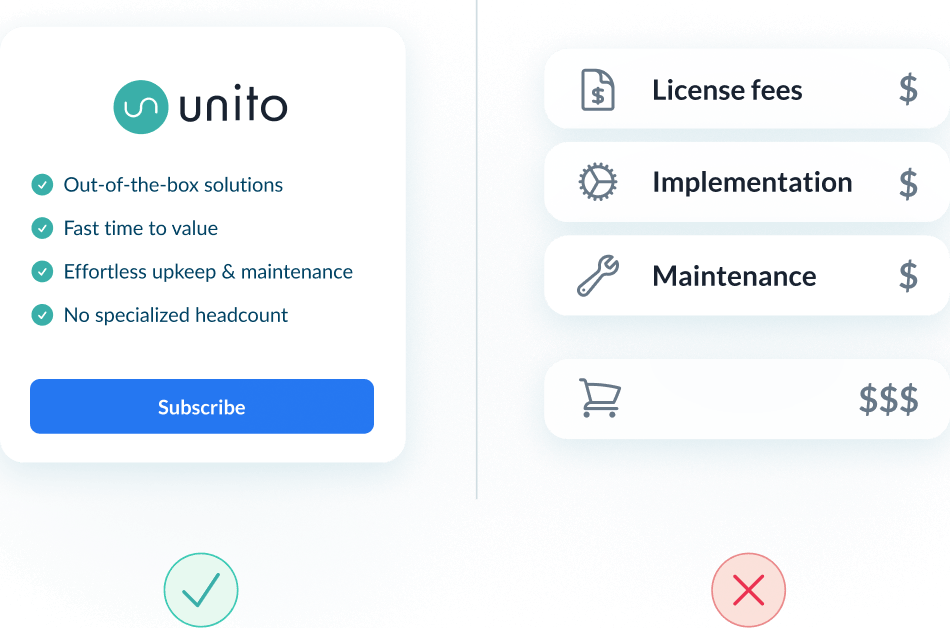
Scalability and resilience
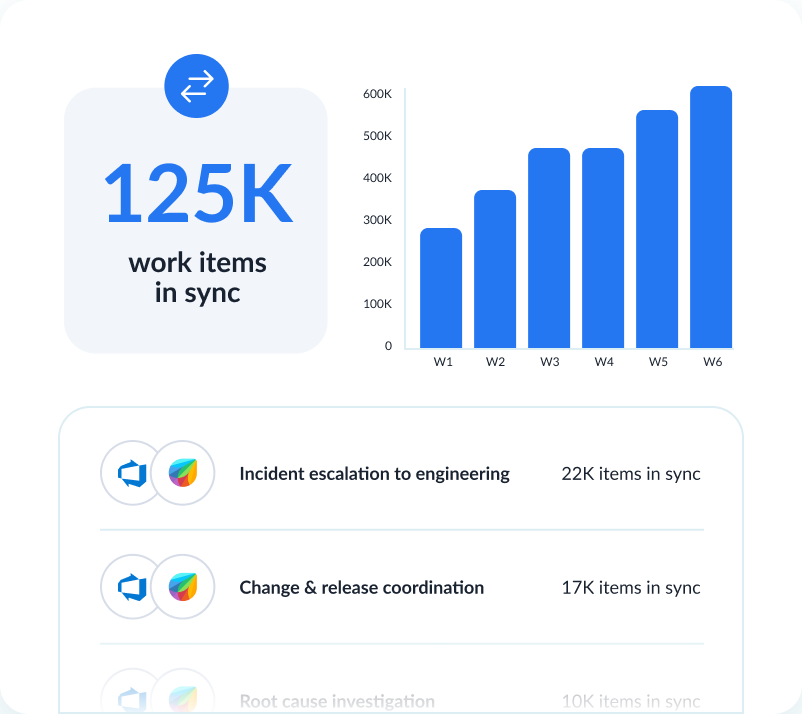
Enterprise-grade control and reliability
Unito is designed to meet the highest standards of security and performance.

SOC 2 Type 2 certified

GDPR and CCPA compliant
- SSO
- Secure from end to end
- Access controls and flow permissions
- Centralized monitoring tools
- No data stored by Unito
See how teams succeed with Unito
-

"Unito’s flexibility and support were critical. They didn’t just provide a tool; they became a partner in solving our workflow challenges."

$595k
saved annually
21k
tasks synced monthly
7.9k
hours saved annually
-

"Absolutely love the two-way sync. It allows our pipeline to run seamlessly from Sales to Engineering, while ensuring everyone is on the same page in Salesforce and Jira."

$312k
saved annually
2600
hours saved
-

"Unito grants more visibility to executives and projects managers. Syncing Jira and Wrike provided more clarity in our reporting and enables collaboration between teams."

$291k
saved annually
3328
hours saved
-

"We saved more than 40 hours a week after syncing Asana and Jira through Unito. Our engagement with the C-suite was far, far better than expected. "

$218k
saved annually
2236
hours saved
-

"Unito isn’t just a nice-to-have—it’s a necessity once you realize how much time and effort it saves."

8.5
weeks IT time saved/year
30-40
ServiceNow licenses saved
9.79x
ROI
-

"Unito allows us to use the right project management and development tools so our teams can do their work without changing how they work."

$98k
saved annually
1040
hours saved
See how you can sync Azure DevOps and Freshservice with Unito
Book time with an integration expert who can help solve your specific workflow integration challenges.
What to expect
- A 15-30 min call to assess your workflow and integration needs
- A solutions overview of Unito’s sync platform
- Hands-on help to get started and support your evaluation
Frequently asked questions about Azure DevOps and Freshservice
Unito’s Freshservice connector works with service requests, so the trigger is a service request rather than an incident. One that matches your rules, such as a status, assignee or tag, can create a linked Azure DevOps work item that then stays in sync.
Freshservice priority values map to Azure DevOps priority field values one-to-one. Define the mapping once per flow. SLA stays owned by Freshservice; engineering sees the priority context.
Yes. Flow rules decide whether private notes sync at all, and where they land in Azure DevOps. Public replies sync to public reply fields. Internal notes can be excluded or kept as private discussion.
Bidirectional. Title, description, state and assignee on Azure DevOps work items sync two-way, and each field’s direction is set separately from which tool can create new items. For most connectors, new comments carry across; edits to already-synced comments don’t.
Yes, by type: text to text, number to number, date to date, and most types can fall back to a text field. On Azure DevOps that covers types like Picklist, Boolean, Integer and Datetime. Each mapping runs one-way or two-way; some are forced one-way by tool limits.
Yes. Comments and attachments sync between Freshservice service requests and Azure DevOps work items. For most connectors, new comments carry across but edits to earlier ones don’t. Synced comments post under the flow builder’s account by default, with the original commenter’s name shown.
About Azure DevOps
Azure DevOps is Microsoft's end-to-end developer platform, offering tools for planning, developing, delivering, and operating software. It supports Agile, Scrum, and CMMI processes with built-in boards, pipelines, repos, and test plans.
Learn more about Unito's Azure DevOps integrations ↗About Freshservice
Freshservice is a cloud-based IT service management platform from Freshworks. Designed for IT teams of any size, it streamlines incident, problem, change, and asset management with an intuitive interface.
Learn more about Unito's Freshservice integrations ↗